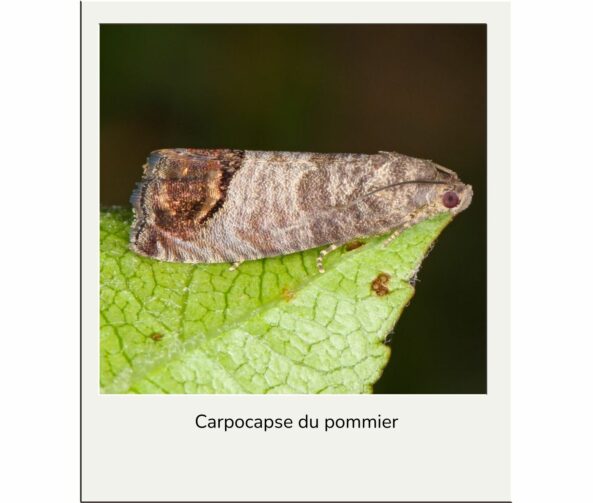
codling moth (Cydia pomonella)
The codling moth (Cydia pomonella) is one of the most problematic pests in fruit tree production. This small nocturnal moth causes significant damage in apple orchards, but it also affects other fruit tree species such as pears, walnuts, peaches, quinces, and apricots.
From spring onwards, close field monitoring is essential. Depending on the climate and weather conditions, the codling moth (Cydia pomonella) may produce two to three generations per year, significantly increasing pest pressure throughout the season.
What damage does the codling moth cause?

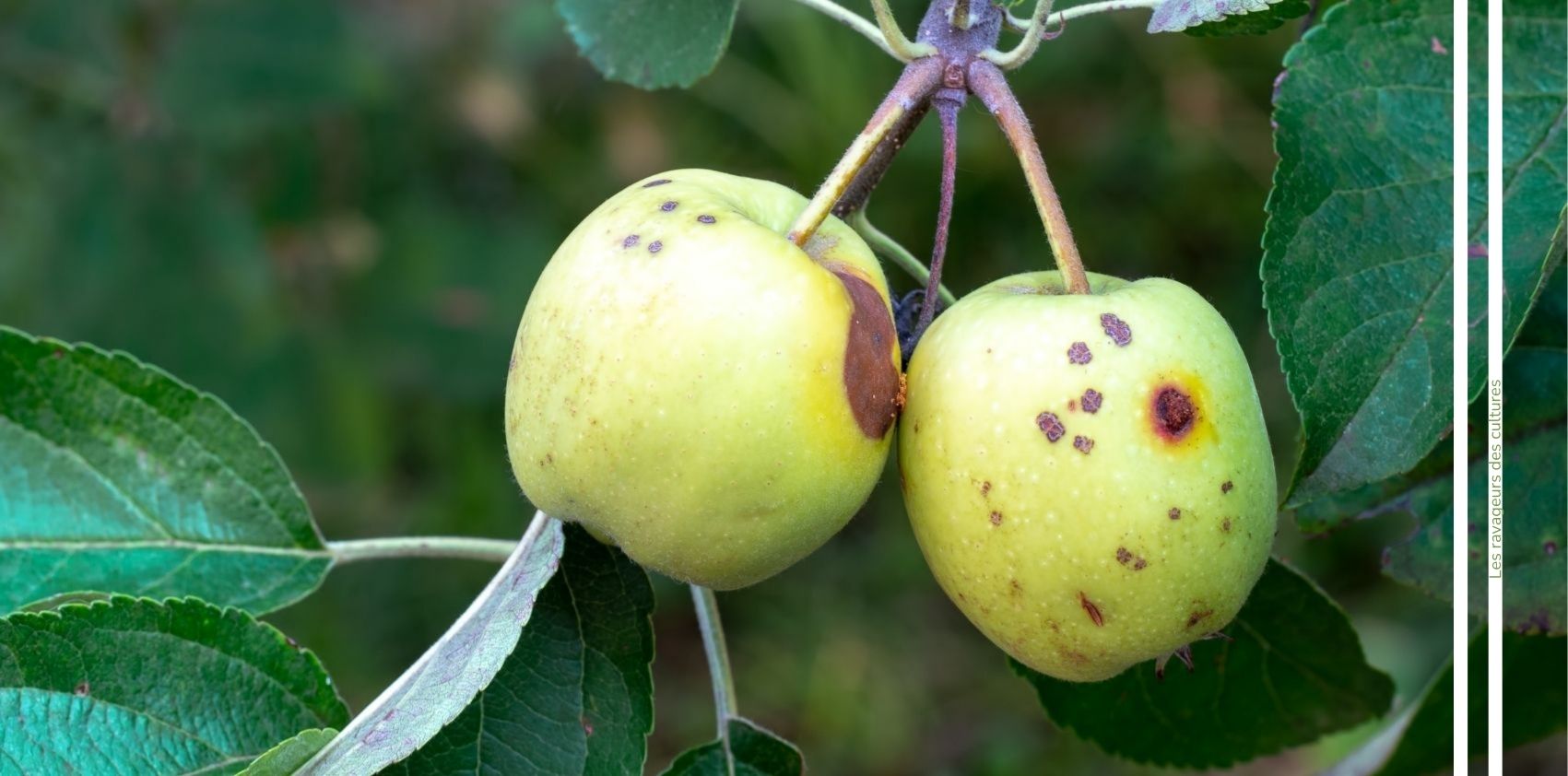
Larval galleries in fruit
Codling moth larvae enter the fruit and bore galleries through the flesh to the core, often reaching the seeds.

Premature fruit drop
Infested fruits fall before reaching maturity, leading to direct yield losses and complicating orchard management.

Economic losses
maged fruits become unmarketable, resulting in reduced yield.
The Advansee Solution
E-gleek connected traps enable precise and continuous monitoring of the codling moth (Cydia pomonella) in orchards. Using an intelligent image-capture system combined with artificial intelligence-based analysis, captures are automatically identified and can be accessed remotely.
Ce suivi en temps réel aide les producteurs à anticiper l’apparition du ravageur, à suivre la dynamique des populations et à intervenir au moment le plus opportun, bien avant que les attaques ne provoquent des dégâts irréversibles sur les cultures.
Our support
From project design through to daily use, we provide a turnkey support service: needs assessment, equipment configuration, training, and technical assistance. This approach ensures simple integration and optimal use of data from the very start.

Diagnosis
We jointly assess the issue. The grower identifies the most sensitive areas to monitor in order to best anticipate early infestations.

Deployment
Deployment of E-gleek delta traps and pheromone lures in the orchard, device configuration, and activation of automated capture monitoring with no need for daily manual intervention.

Optimization
Adjustment of positions, image calibration, and alert configuration to ensure reliable data and the earliest possible detection.

Initial results
Early monitoring quickly makes it possible to observe the first codling moth flights and helps growers intervene at the right time, before fruit quality is affected.
Our technological tools for managing aphids:
Trap
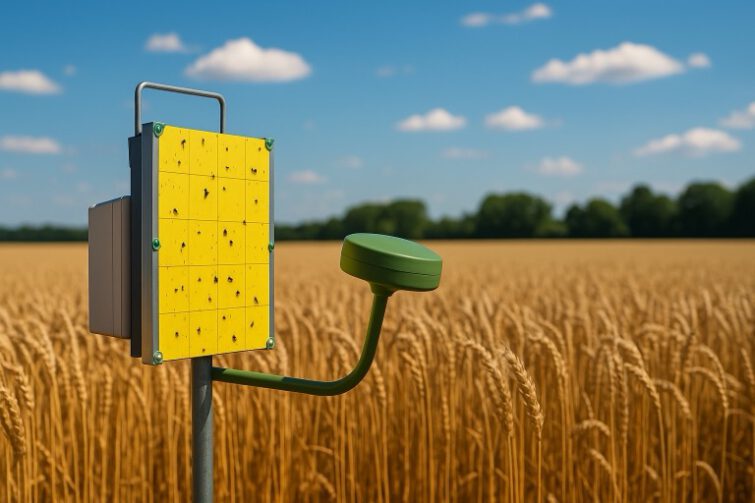
E-gleek
A connected trap that analyzes the number of trapped insects and issues alerts when an insect flight is detected or when the sticky card is saturated.
- Combined with analysis software
- Email or SMS alert
- 12 months of autonomy
They had this problem
-

Samura Pest Detection
In Prague, at a manufacturing plant, we installed three flying insect traps capable of detecting pests and sending an alert when they are caught.
-

Producteurs de colza
Mise en place de pièges pour le suivi des populations de grosses altises dans le but trouver des solutions alternatives au Phosmet
-

Les viticulteurs du bassin de Cognac
Contrôle sanitaire obligatoire des populations de cicadelles de la Flavescence Dorée
-
-